
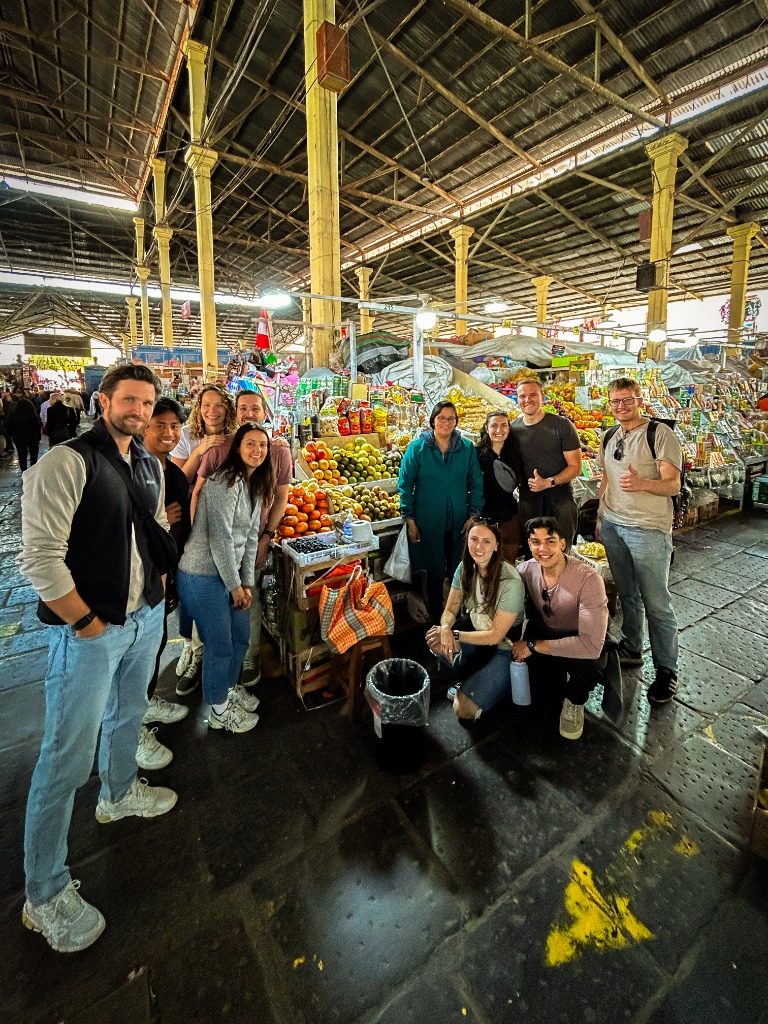
San Pedro Market, Cusco: What to Taste and Buy

Walter R.
Founder & Lead Guide, San Pedro Market Food Tour
San Pedro Market (Mercado Central de San Pedro) is Cusco’s main market, a short walk southwest of the Plaza de Armas. People in Cusco shop here for fruit, bread, cheese, potatoes and herbs, and eat at its lunch counters. This guide covers when to go, what to taste, what to buy and how to keep your valuables safe.
Where It Is and When to Go
The market sits about ten minutes on foot from the Plaza de Armas, next to the San Pedro church. It opens early in the morning and winds down in the late afternoon. Mid-morning is the best time for a first visit: the produce is fresh, the juice counters are busy and the lunch crowd has not arrived. Many people say the high iron hall came from Gustave Eiffel’s workshop. Historians are not sure, but the building is still beautiful.
The Juice Aisle
One long aisle is lined with juice counters, each run by a woman with a row of blenders and a pile of fruit. Choose your fruit, or ask for a “surtido”, a mix, and it is blended in front of you. When you finish, she usually refills your glass from the jug. That extra pour is the yapa, a little gift that is part of shopping across the Andes.
- Try papaya, mango, passion fruit or a surtido with orange and banana.
- If you have a sensitive stomach, ask for “sin hielo” (no ice) during your first days.
- Pay the counter you sat at; prices are usually written on a board.
Fruits You Will Not Find at Home
Much of the fruit comes from warm valleys below Cusco, where the Andes meet the cloud forest. Ask the stallholders to let you taste them. Many will cut a piece for you to try.
- Granadilla: crack the shell and eat the sweet, jelly-like seeds.
- Chirimoya: creamy, sweet and best when it gives slightly to the touch.
- Lúcuma: a dry, caramel-tasting fruit, the flavor of Peru’s favorite ice cream.
- Aguaymanto (golden berry): small, tart and sold by the handful.
- Tumbo and pacay: sour banana passion fruit, and a long green pod with sweet, cottony pulp.
Bread, Cheese and Andean Staples
Near the entrances, vendors sell pan chuta, the large round sweet bread from the town of Oropesa, and fresh highland cheese to go with it. Further in, the potato stalls show how many kinds the Andes grow, from tiny yellow potatoes to purple ones, and chuño and moraya, potatoes freeze-dried in the high plateau as the Incas did. Look for the giant white corn of the Sacred Valley, sold fresh as choclo or dried for toasting.
Lunch Counters and Soups
The back of the market is a food court of small counters with long benches. People in Cusco come here for soups, caldo de gallina and set lunches at local prices. Sit where the benches are full and the pots are big, and order the dish most people around you are eating.
A market tells you how a city eats. Spend an hour in San Pedro and you understand Cusco’s kitchen better than after a week of restaurants.
Shopping and Staying Safe
Besides food, San Pedro sells textiles, alpaca, medicinal herbs and the items families use for offerings to Pachamama. The aisles get crowded, so keep your phone and wallet in a front pocket or a zipped bag, carry small notes, and leave valuables at the hotel. If you want someone to explain what you are tasting and connect it to the Inca city next door, our San Pedro Market tour starts here and continues to Qorikancha and the Twelve-Angled Stone.
Founder and lead guide at Auqui Adventures. Dedicated to sharing the authentic soul, sacred mountains, and living culture of the Andes with travelers from around the world.
Planning a luxury journey to Peru?
Our private travel designers will handle all logistics, permits, and VIP bookings.